
3 Reasons LSA Ranking Dropped: How to Get Back to the Top Positions
You were sitting at the top of Google Local Service Ads with a steady stream of calls. Then something changed. Now you are buried in the “See more” section, watching competitors grab leads that used to be yours.
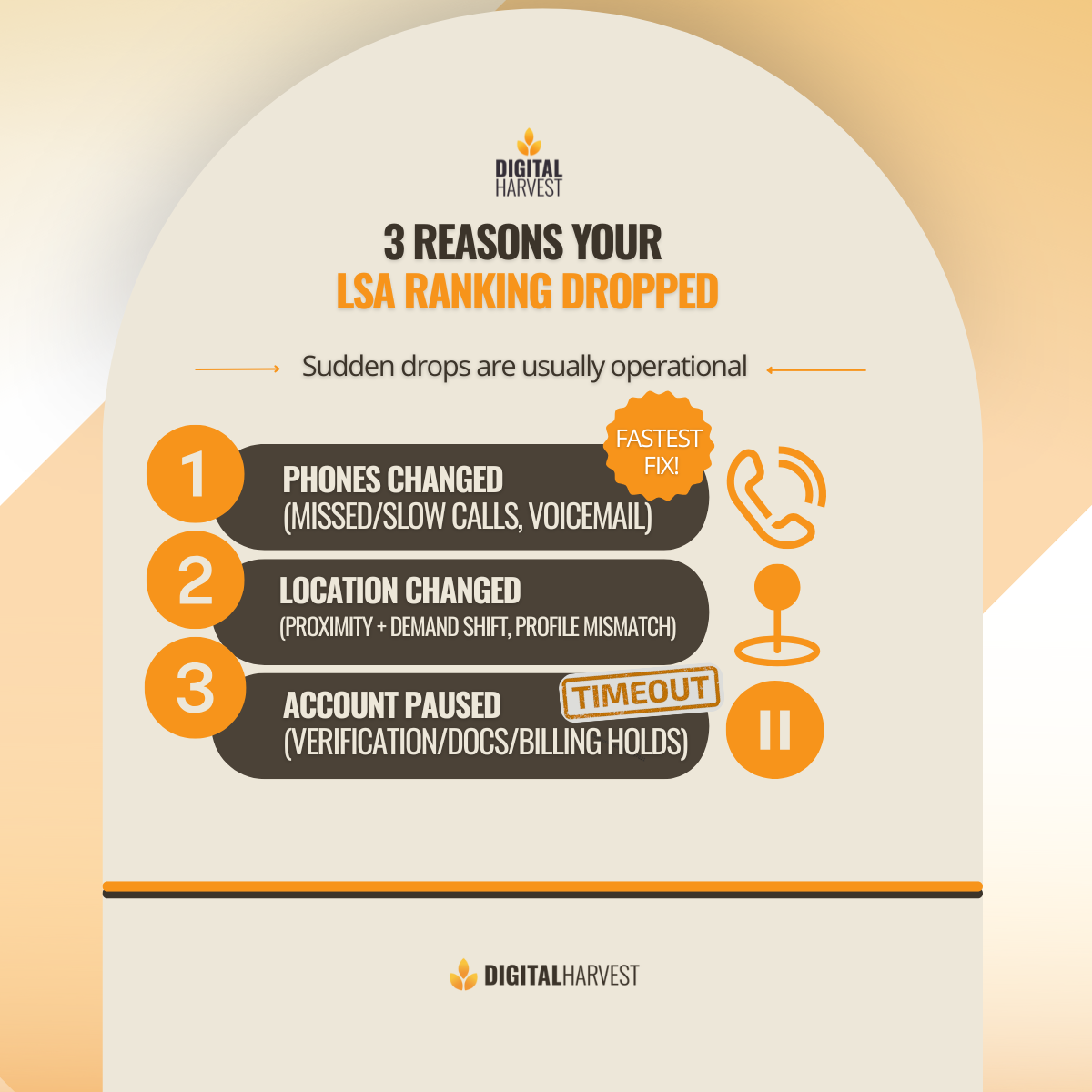
This kind of drop is frustrating, but it is also very different from a slow decline. A sudden change in LSA ranking almost always points to something operational—and in many cases, those same signals can contribute to broader Google Business Profile ranking issues if they affect trust, responsiveness, or consistency across your listings. It is rarely SEO magic, a secret bidding strategy, or a new competitor entering the market.
In this guide, we break down the three real reasons LSA ranking dropped. You will also learn how to confirm which issue applies to your account and what to fix first inside your LSA dashboard to get back in front of potential customers.
Key Takeaways
- Missing calls (or slower response) is the fastest way to lose top LSA placement, even if you “call back later.”
- A location change can quietly reshape who you’re eligible to show for, because proximity and demand shift with your address.
- Pausing/restarting or swinging budgets can put your account in “timeout,” and you won’t instantly return to your old rank.
- Hidden pauses happen: verification, insurance renewals, license updates, or billing issues can knock you down without you realizing it.
- These issues create sudden drops, unlike slow factors (like competitors gradually improving).
Reason #1: Something Changed With Your Phones
The biggest reason I see a sudden drop in LSA ranking is simple: something changed with the phones—which directly impacts how to increase Google LSA impression share, since responsiveness is a major visibility signal inside LSAs. It might feel minor on your side, but it’s a major ranking factor inside Google Local Service Ads because Google tracks what happens when LSA leads come in—making it critical to understand how to fix your LSA profile trust signals if you want to protect and improve your ranking.
This is the quickest path from prime real estate at the top to missed leads in “See more,” even if your Google reviews and reputation are strong.
A phone change can look like a lot of things. Maybe a new employee started answering differently, or you had a busier-than-normal month and more calls hit voicemail. Sometimes it’s not “missed” calls; it’s slower handling during peak times, longer rings, or rushed call handling that fails to meet customer needs.
Here’s the signal Google rewards and punishes. Google rewards businesses that answer calls every single time, answer quickly, and keep the call from going to voicemail. If more calls are leaking to voicemail or calls are failing to connect cleanly, your delivery and ranking can drop fast.
Google doesn't care if you're calling back, and they don't know if you're calling back.
This is also why it can feel confusing compared to traditional Google Ads. In LSAs, you’re not tweaking a bidding strategy the same way you would in Google Ads. You’re protecting the customer experience, because that’s what Google sees.
What to Look for Inside Your Operation
If you’re troubleshooting a sudden drop, open your LSA dashboard and compare “before” vs “after” in your real operation, not just in the account.
- Who answers calls now vs before the drop? Any staffing shift, new dispatcher, new office manager, or a different script can change outcomes.
- Call coverage during rush windows like lunch, end-of-day, and the moments technicians are driving. These are common missed-lead windows.
- Patterns that indicate decline: More voicemails, longer rings, more missed calls, or calls getting marked as not connected.
- If you run message leads, check whether you’re still able to respond fast. Even if this video is about phone changes, the same “respond fast” expectation shows up across LSA campaigns.
These are table stakes for service businesses trying to rank higher. When you tighten this up, you often see delivery stabilize and valid leads return.
If you want to separate great calls from junk, my team put together a framework on lead quality you can use to triage and improve outcomes from the leads you’re already paying for in Google Local Service Ads—an approach that can significantly improve junk removal business growth by focusing on higher-quality opportunities. Here’s our guide on how to grade and dispute leads for better lead quality: How to Grade Your LSA Leads.
Fix Playbook
The goal here is consistency, so Google trusts you again with more opportunities and more best leads.
- Restore answer-rate consistency so calls don’t hit voicemail. This is where many companies lose ranking overnight.
- If you can’t answer every time, use an answering service so someone always picks up and routes the call properly.
- Standardize call handling when you’re slammed, so callers still get helped and booked instead of bouncing.
- Make sure the team understands the connection: missed calls equal ranking drop risk, reduced lead volume, and fewer chances to maximize leads.
If your competitor suddenly passed you, it might not be ad tricks. It might be that they simply answer calls more reliably, and Google sees that good service and protects the customer experience.
Reason #2: A Location Change (And Proximity/Demand Effects)
This one surprises a lot of owners, so hear me out. Location matters inside local service ads because proximity matters to who you’re eligible to show for. If you physically moved, your coverage map effectively changed overnight, even if your service areas and offerings stayed the same.
That’s why a location change can cause a sudden ranking drop instead of a slow drift. You didn’t gradually lose ground. You changed where Google thinks you’re based, and the proximity math changed instantly.
There are two mechanisms at work.
First, your proximity relative to potential customers shifts, so you may no longer be “closest” to the same part of the market. Second, demand can differ in the new area, meaning you might be in a pocket with fewer searches, fewer emergency service calls, or different competition density—which makes it even more important to understand how to get reviews from emergency calls to strengthen your visibility and credibility quickly.
That shift can show up as fewer impressions, fewer opportunities, and fewer leads. You might even see fewer searches for your job types in your immediate radius, even if your plumbing services or HVAC services are unchanged.
The Two Location Scenarios That Usually Cause Sudden Drops
Scenario A: You physically moved, and rankings dropped right after.
That’s proximity and demand changing. Some of that reality cannot be optimized away quickly, because it’s a location variable.
Scenario B: The move triggered profile issues you didn’t notice.
This is the sneaky one. Your Google Business Profile might have hit a suspension during the move, or the address update didn’t fully align. Sometimes there’s an address mismatch between your LSA profile and your Business Profile, and you don’t realize it until performance tanks.
If you want the cleanest rules for how Google expects addresses to be managed, start with Manage your business address in Google Business Profile Help.
And if you’re trying to validate what actually changed inside the profile, Google’s Edit your Business Profile shows where address edits and other core fields live.
What to Do Next
Start with the simplest confirmation: did anything change in your address or location details in the last 30–60 days? If yes, don’t assume it’s unrelated.
Next, check for mismatches between your LSA account and your Business Profile business information. Your name, address, and core details should accurately reflect the same reality across systems.
If you suspect a behind-the-scenes mismatch, support may be the only way to uncover it. I know that’s frustrating, but it’s real. If the root cause is a data mismatch, fixing it can restore eligibility and help you climb back.
If you want a step-by-step way to handle a move without triggering avoidable chaos, we laid out the clean process here: How to Change Your Google Business Address When Moving Locations.
Reason #3: A Paused Account, Verification Issues, or Billing Problems
Consistency is critical for LSA campaigns. When that consistency breaks, ranking often drops fast.
Pausing your account manually is one of the most common mistakes. Businesses pause because they are too busy, cannot service everything, or want tighter control over spending. While that may feel logical, it comes with a cost.

When you pause it, you don't just jump back in the game and they put you with everybody else.
When the account restarts, Google eases it back in. Think of it as a timeout period.
Hidden Pauses You Did Not Mean to Trigger
In other cases, nothing was intentionally paused at all. These are the common behind-the-scenes issues we see that cause unexpected shutdowns.
- Insurance documentation can expire.
- Background checks may need renewal.
- Trade licenses can lapse and require license verification.
- Billing problems can occur when credit cards expire or bank details change.
Any of these issues can pause your account for days or weeks. When they are resolved, ranking does not instantly bounce back.
Recovery Checklist (What to Inspect Inside the Account)
First, confirm the account is active and eligible. Don’t assume it is. Check status, notifications, and any banners inside the platform that indicate a hold.
Second, confirm documents are current. That includes insurance, licensing, and background checks. If you’re a category that shows the Google Guaranteed trust signal, remember that Google is trying to protect users from low-quality experiences and disputes.
Third, confirm billing is clean, and payments are current. Google will not reward accounts that fail to pay, and that can put you in the doghouse quickly.
Fourth, set expectations for a ramp-back period after you fix the hold. You may not return to the very top overnight, even if your average star rating is strong and your review count looks great.
If you need a clean reference for verification-related requirements across Google surfaces, including video, documentation, and business profile consistency, our team put the whole system in one place here: The Complete Guide to GBP Verification in 2025.
Final Checks to Get Back Out of “See More”
If you want out of “See more,” use the sudden-change lens. Fix the thing that changed. These three causes create the fast drop, not slow factors like competitors gradually improving over months.
Start with phones and answer rate first, because it’s the biggest lever and the fastest way to lose top positions. Then, evaluate whether a location change or an address alignment issue reshaped your eligibility and demand. Finally, audit pauses, interruptions, and hidden holds like verification, insurance, licensing, background checks, and billing.
Other factors matter, but they usually don’t explain a sudden cliff. Things like high-quality photos, your business description, job types, and offer emergency services settings can influence performance and trust over time. They are not typically the reason you dropped overnight.
Get Your Top LSA Positions Back
If you were at the top and fell into “See more,” don’t overcomplicate it—start by reviewing the core LSA Ranking Factors that influence visibility and placement inside Google Local Service Ads. Focus on the three reasons above, identify what changed, and bring the system back into alignment.
Some fixes are fast. Others require you to rebuild consistency so Google sees stability again. Either way, the path back is operational: answer calls, keep the account active and compliant, and remove the hidden friction that suppresses ranking.
If you’d like help diagnosing what changed, we can review your LSA profile and map out a clear path forward. Use our contact form or give us a call at (505) 365-1545. We’ll help you get it sorted and moving in the right direction.
Frequently Asked Questions
Why did my Google Local Service Ads ranking drop all of a sudden?
Sudden drops usually come from a phone performance change, a location change, or an account pause or hold. These create immediate eligibility and delivery changes, unlike slow drift caused by competitors gradually improving.
Does missing phone calls hurt Local Services Ads ranking?
Yes. Missed calls, calls hitting voicemail, and slower response time can reduce how often you show and how high you appear. Google sees missed calls as a customer experience risk.
Can moving my business location lower my Local Services Ads position?
Yes. Proximity affects who you’re eligible to show for, and demand can differ by area. Moves can also create address mismatches between your LSA and Google Business Profile.
What happens to LSA ranking if I pause and restart my account?
You typically don’t resume exactly where you left off. Google may ease you back in after a pause, especially if pauses happen repeatedly or budgets swing aggressively.
Why would Google pause my Local Services Ads for insurance, licensing, or billing issues?
If documents expire or billing fails, your account may become ineligible to serve. That can behave like a pause, and it can take time to regain top placement after the issue is fixed.
How can I get expert help diagnosing and fixing my Local Service Ads performance?
If your Local Service Ads ranking dropped and you want clarity instead of guessing, the best next step is to talk with a team that specializes in Google Local Service Ads every day and can help you fix your LSA reputation score.
Digital Harvest works with service businesses across the U.S. to diagnose LSA ranking issues, identify what changed, and build a clear plan to restore lead volume and consistency.
You can reach the team by calling (505) 365-1545 or by filling out our contact form to schedule a conversation and review your account.