
Top 5 Google Business Profile Ranking Factors for 2026
Google Maps visibility is shifting fast in 2026 as AI-powered search results evolve and competitors fight for local search visibility. Many home service owners still stress about factors they can’t control while overlooking the Google Business Profile ranking factors that actually impact local search rankings and search visibility.
After working with hundreds of local businesses, I’ve seen which ranking factors reliably drive local results and which ones don’t. Below are the five metrics that truly matter for improving your Google Business Profile ranking and helping your business listing appear more often when potential customers search for your services.
Ranking Factor #1: Proximity to the Searcher
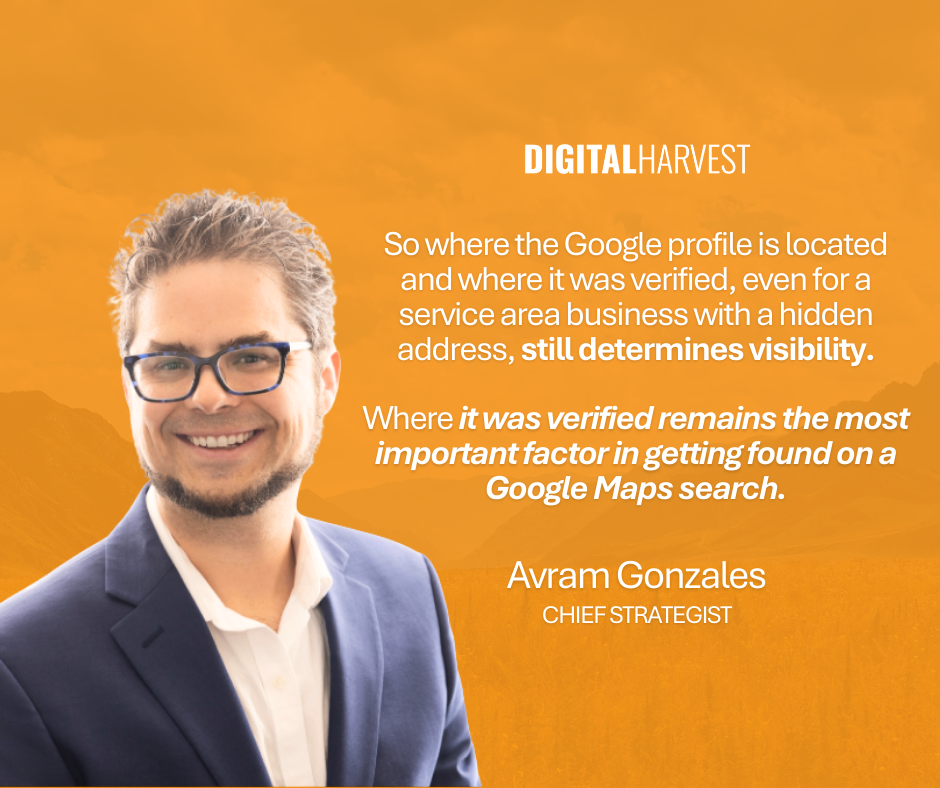
Proximity is the strongest local search ranking factor in 2026. Where your business address was verified is what determines your local visibility in Google Maps. It does not matter where you want your service area business profile to appear. Even if the address is hidden, Google still bases your ranking on the physical verification point.
This is why many businesses see ranking shifts even when their business information and optimization efforts remain up to date. Google simply prioritizes the closest nearby business for most search queries.
If you're considering moving locations, remember that your physical location affects how your business appears in the local pack rankings. Always evaluate competitors block by block before relocating, as moving can dramatically reduce your search results footprint.
Thinking Strategically About Location and Expansion
Before choosing a new location, check our guide on How to Choose a Verifiable Address for Google Business Profile. Reviewing this first helps ensure your local search performance supports your long-term service goals.
Avoid virtual offices unless they support real operations, NAP data accuracy, and satisfied customers leaving positive reviews. Also, ensure the office matches the city names and service area your company offers.
Reviewing Google’s guidelines on representation and address requirements can help you stay compliant and set your profile up for long-term success.
Ranking Factor #2: Review Velocity, Not Just Review Count
A big misconception about Google Business optimization is that how many of reviews you have is what drives local rankings. In 2026, Google focuses on behavioral signals, specifically, review velocity, or how consistently you earn positive reviews.
If you stop collecting reviews, your local search visibility fades over time. Google interprets inactivity as a drop in quality.
Keeping a Steady Stream of Reviews Coming In
Make review collection part of your ongoing workflow. Regular reviews help Google understand which relevant services remain in demand across multiple search engines and device types. If you support multi-location businesses, review velocity becomes even more important because each location needs its own local citations and activity signals.
For practical ways to build consistent review habits inside your team, check our detailed guide on getting more home service reviews: 4 Ways to Get More Reviews for Your Home Service Business. Also, check Google’s review policies to stay compliant with Google’s policy on feedback.Ranking Factor #3: Real User Signals, Not Fake Engagement

User interactions such as calls, clicks, website visits, and direction requests are powerful behavioral signals in local search. These metrics tell Google that real people find your business profile relevant.
Some agencies try to manipulate these signals artificially. While this may temporarily boost visibility, it creates long-term risks for your business rank and can result in suspension as Google improves detection across AI-powered search results.
Why You Should Avoid User-Signal Manipulation
Fake engagement fades quickly and jeopardizes your online visibility. Instead, focus on legitimate user behavior driven by strong content and consistent customer experience.
These authentic signals help search engines understand your relevance and drive more visibility in local pack placements and local search results.
Ranking Factor #4: Website Content That Supports Your Google Business Profile
Your website still plays a major role in local SEO and influences how Google interprets your business info, web pages, and relevant searches. In competitive markets, Google pulls context from your site to understand your business category, primary category, additional categories, and relevant additional categories.
If your site lacks location information, industry-specific content, or city names, it weakens your local search authority. Missing service pages reduce your relevance for custom services and limit your performance across search term variations.
Google even highlights keywords from your website directly in your GBP, confirming how tightly the systems connect.
Content Gaps That Hurt Your Map Visibility
Watch for:
- Missing city references
- Missing service-specific web pages
- Thin content affects your website’s authority and click-through rate
Ranking Factor #5: Directory Listings and Citations in the Age of AI

Directory listings and local citations are more important than ever as AI-powered search results rely on cross-verifying business name, physical address, business hours, and other business information across the web.
If your citations are outdated or inconsistent, Google and AI models lose trust in your business info, reducing local search visibility and local results accuracy. This especially affects businesses that have moved or operate multiple locations.
Cleaning Up and Expanding Your Citations
Correcting citation inconsistencies ensures your business listing stands out and supports stronger search visibility. Accurate citations also improve your positioning in the local pack and improve trust signals to both search engines and potential customers.
To improve accuracy, check Digital Harvest’s guide on NAP consistency for valuable steps toward strengthening your online visibility.
Putting These Google Business Profile Ranking Factors to Work in 2026
Here’s what matters most for improving your Google Business Profile ranking factors and winning more customers this year:
- Proximity
- Review velocity
- Authentic behavioral signals
- Strong website content
- Clean, consistent directory listings
Focusing on these fundamentals, not shortcuts, delivers the biggest impact on local search performance and helps your business attract more customers.
If you want expert guidance on applying these ranking factors to your business, Digital Harvest can help you build a predictable and scalable local search strategy. Our team specializes in Google-focused services for home service companies that want reliable lead flow and full transparency.