
Just Got a Bad Review? The 24-Hour Damage Control Plan for a Bad Google Review
You just got a bad review. You’re staring at that Google notification, and your stomach drops. I get it, because negative reviews and negative feedback can feel personal, even when you know it’s “part of business.”
Here’s the good news. If you run this 24-hour damage control plan for a bad Google review, you can protect your online reputation, rebuild trust, and guide the situation toward a positive outcome. This will not be the last time you deal with bad reviews, so I want you to systematize this like any other crisis response inside your customer support team.
Key Takeaways
- A bad Google review does not mean you’ve lost control of your online reputation. What matters most is how quickly and professionally you respond once the review appears.
- Speed signals care. Structure prevents emotion from driving your decisions. When you follow a clear, repeatable process, you protect trust with the customer and with future customers reading your reviews.
- Most negative reviews can be de-escalated when you seek understanding first, communicate clearly, and avoid letting the situation drag on.
- Even difficult or emotionally charged feedback can turn into valuable feedback when it’s handled with genuine concern and follow-through.
- The goal of this 24-hour damage control plan is not to “win” every situation. It’s to stabilize the moment, protect your brand’s image, and create the best possible path toward resolution, customer satisfaction, and long-term reputation building.
The 5-Step 24 Hour Damage Control Plan (And Why Timely Manner Matters)
This plan is designed for the first 24 hours after the Google review lands. Speed and structure matter because the longer a negative experience sits unresolved, the more it spreads through customer feedback, word of mouth, and review sites.
Step 1: Assess the Situation (Collect Data Before You Call)
The moment the bad review rolls in, your first move is not to type a public response. Your first move is review monitoring, then gathering more data so you understand what happened on your side.
Talk to the technician who was out there. If you need to, talk to the dispatcher. Pull any call records, notes, and detailed feedback you have so you can understand the timeline, what was promised, and what was delivered.
This is reputation management strategy at the ground level. You are collecting valuable insights that will help you address customer concerns with clarity instead of guesswork.
Your output at the end of Step 1 is simple. You want a clean summary of what occurred, plus a sense of sentiment from your team so you walk into the next conversation prepared and steady.
Step 2: Create a Plan (Based on What Kind of Bad Reviews This Is)
Before you call, you need a plan. This is not about template responses or identical responses that make you sound robotic.
This is about choosing the right approach for the situation, so you can respond appropriately and maintain professionalism while still being human. You are protecting your brand reputation while trying to make things right.
Identify Which Bucket It’s in (Misunderstanding, Your Fault, or Unfounded)
Ask yourself these questions before you pick up the phone:
- Was this a misunderstanding?
- Was there a disconnect between the price quoted and what happened?
- Was it timelines or materials that weren’t met?
- Were we in the wrong? Did we mess up or botch the job?
- Is this complaint completely unfounded?
Misunderstandings are often the easiest to correct, as long as you actually listen. Sometimes people just want to be heard, and that alone changes the temperature of the conversation.
If it’s unfounded, you may be dealing with misleading feedback, a neutral review that reads harsher than it is, or even fake reviews. In that case, the goal is to seek understanding, not to “win” an argument.
Decide Your Approach (Listen-First vs Solution-In-Hand)
If you were in the wrong, go in with ideas to make it right. That could mean coming back out and fixing the issue for free, or offering a discount on additional services when it makes sense to resolve the bigger picture.
If it’s a misunderstanding, go in ready to listen and align on what they expected versus what happened. That alignment is how you rebuild trust.
If it’s unfounded, go in calm and customer-focused, and accept you can’t win them all. You can still show genuine concern and offer further assistance, but sometimes the best outcome is simply demonstrating excellent customer service to everyone else reading.
When you finish Step 2, you should know what you need to learn, what you are willing to offer, and how you’ll keep the conversation offline instead of turning it into a public debate.
Step 3: Reach Out Fast (Owner/Manager Call and Listen All the Way Out)
This is the step most business owners get wrong. They wait, they avoid, they hope it blows over. That delay makes the customer’s experience worse, and it creates a bigger problem than the original job issue.
You want timely responses here. You want speed, clarity, and follow-through.
Timing Standard (Timely Manner)
If two days go by and you have no response, these people are furious by that point. Calling within an hour or within 30 minutes is impressive and signals care.
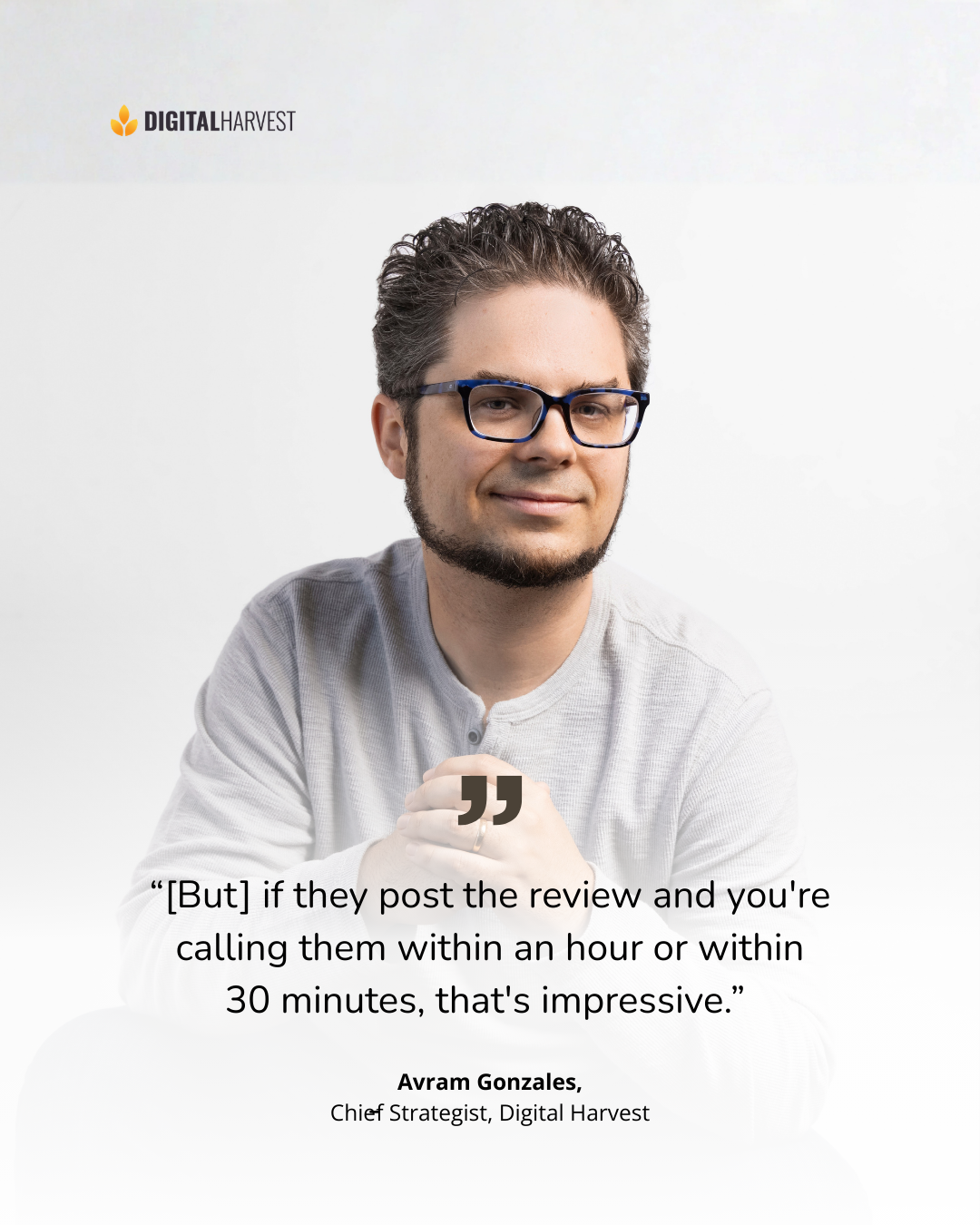
“But if they post the review and you're calling them within an hour or within 30 minutes, that's impressive.”
That one habit alone changes outcomes. It is simple damage control that prevents the story from growing legs.
Who Should Call
If possible, have the owner or a manager call. Higher-ups get attention, and it communicates that the business takes customer feedback seriously.
If the technician calls, it can backfire. The customer may already blame that person, and they do not want another round with the same voice.
Call Opener and Listening Rules (Responding to Negative Reviews)
Here’s a clean opener you can adapt:
“Hey, it’s [Name]. I’m the owner or manager of [Company]. I saw your one star review on Google, and clearly we messed up somewhere. I’m calling to understand what happened from your end.”
Then you listen. You are not listening to respond. You are listening to gather information.
Ask questions and let them get all the words out. If it’s a misunderstanding, acknowledge their perspective. Simple lines like “I could see how you would see it that way” help you address concerns without admitting to something you did not do.
Most importantly, do not leave the call open-ended. Before you hang up, set the next step.
If you have the resolution, schedule the appointment. If you need time to check parts or move a tech, set a callback time and follow through. Tell them exactly when they’ll hear from you next, and then meet that expectation.
That is how you stop the spiral and start rebuilding trust with dissatisfied customers.
Step 4: Respond to the Review (Responding Publicly With Professional Tone)
After you make contact, you respond to the review. Even if the situation is still in progress, you can post a public response that confirms you are taking action.
This matters because online reviews influence future customers. Your public response is not just for the person who wrote it. It is for other customers scanning search results, comparing multiple reviews, and deciding who feels trustworthy.
Keep it short, calm, and customer-focused. Here’s the structure:
- Thank them for bringing it to your attention.
- Confirm that a manager or owner reached out.
- State that you look forward to making things right.
That shows care without getting into details, and it avoids turning the review into a back-and-forth thread. It also helps you maintain professionalism, even if the review includes customer concerns that feel unfair.
If you want additional guidance straight from Google, review their tips for effectively responding to Google reviews. This supports responding effectively without falling into defensive language.
Step 5: Solve Fast, Then Ask for the Review Update the Right Way
This is where reputation building actually happens. Review management is not about perfect operations. It is about how fast you recover and how consistently you create a positive outcome.
Here’s the logic, and I want you to treat it like a checklist:
- If you drag your feet, this person will spend weeks telling everyone about the negative experience.
- Fast resolution lets you become the hero by making the wrong right.
- Speed shows you care and rebuilds trust.
- Conflict resolved often strengthens the relationship, just like it can in real life.
This applies across industries. A local business in the trades feels it, and so do healthcare providers who depend on trust signals and honest reviews.
When you move quickly, you protect your brand’s image, reduce reputation management risk, and create the conditions for more positive feedback later.
Follow-up Sequence to Earn the Update
First, your technician confirms satisfaction right on the job. Make sure the plan went according to plan, and ask directly about customer satisfaction before leaving.
Then someone from your team calls a day or two later. Confirm it is still fixed. Keep it short and kind, and let them tell you how they feel now.
Once they confirm they are satisfied, ask this:
“Would you be willing to update your Google review to reflect your current satisfaction?”
Then make it easy. Offer to send the link directly, and ask when they think they will be able to update it. That timing question increases follow-through, which helps you earn new reviews, improve review volume, and stack more positive reviews over time.
This is also where continuous improvement comes from. When you track patterns, you can identify recurring issues inside your internal processes, turn customer feedback into valuable insights, and prevent the same negative reviews from repeating.
Work the Steps, Don’t Spiral
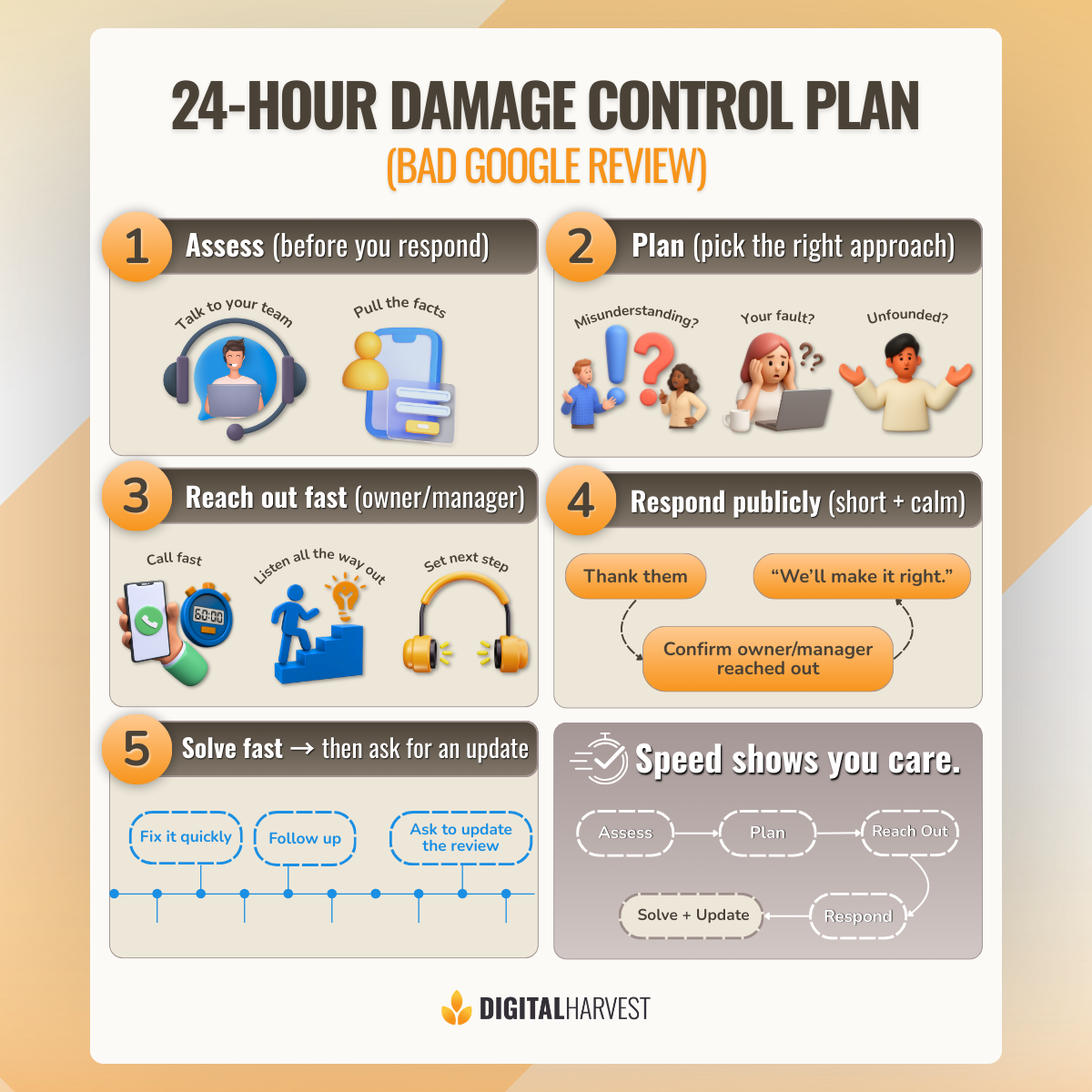
Here’s the system again, in order: assess the situation, create a plan, reach out fast, respond publicly, solve fast, then ask for an update.
You are going to get bad reviews sometimes. What matters is that you have a repeatable crisis response you can run, and that you show care through timely responses and follow-through.
If you want help with your online presence, review management, and a stronger online reputation on Google, that is what we do at Digital Harvest. You can contact us here or book a call on my calendar, and we’ll map next steps.
Frequently Asked Questions
What should I do immediately after getting a bad Google review?
The first thing you should do after a bad Google review appears is pause and gather information. Review call records, job notes, and internal processes so you understand the customer’s experience before responding.
This helps you address customer concerns accurately instead of reacting emotionally. Strong review monitoring and preparation protect your online reputation and lead to more effective review responses.
Should I call the customer who left a negative review?
In most cases, yes, you should call the customer and take the conversation offline. A fast call from the owner or manager shows genuine concern and often calms dissatisfied customers.
This approach helps you understand the negative experience, rebuild trust, and move toward a positive outcome. It also demonstrates excellent customer service to anyone reading your public response later.
How fast should I respond to a bad review on Google?
You should respond as quickly as possible, ideally within hours of the negative Google review being posted. Timely responses signal professionalism and show potential customers that you take customer feedback seriously. Waiting too long can escalate frustration and damage your brand reputation. Responding promptly is a key part of any reputation management strategy.
What should I say in a public response to a negative Google review?
A public response should stay professional, calm, and focused on addressing feedback. Thank the reviewer for sharing their experience, confirm that you reached out, and state your intent to resolve the issue.
Avoid defensive language, template responses, or debating details publicly. This helps maintain professionalism and reassures other customers reading your online reviews.
Can I ask a customer to update their Google review after I fix the problem?
Yes, you can ask once the issue is resolved and the customer confirms they are satisfied. The best time is during a follow-up call when customer satisfaction is clear and emotions have settled. Offer to send the Google review link directly and ask when they think they can update it.
This approach supports honest reviews, more positive reviews, and long-term reputation building.
How do I reach Digital Harvest for help with reviews and online reputation?
If you want help with review management, responding to negative reviews, or building a strong online reputation, you can contact Digital Harvest directly. Visit the Digital Harvest contact page or book a call with Avram to discuss your goals and current challenges.
Our team helps local business owners turn customer feedback into growth opportunities. We’ll help you build a clear, repeatable reputation management strategy that drives more trust and more jobs.